

Many small and medium businesses in the UK face a big problem today. Big buyers and the UK government want suppliers to follow strict eco rules. If your business cannot show good green habits, you will lose big contracts to competitors. You might also face extra costs from new rules like the Streamlined Energy and Carbon Reporting framework.
This simple guide helps you fix that problem. You will learn easy steps to lower your carbon footprint and obey environmental, social, and governance rules without spending a fortune. We cover simple waste reduction, fair treatment of staff, and basic record keeping. By the end of this guide, you will know how to win green contracts, build trust with local customers, and cut monthly running costs. Making your company green is not just good for the planet. It makes your business stronger and more profitable for the future.
Sustainable Business Practices and ESG Compliance
This guide shows how UK firms can lower carbon emissions, treat workers fairly, and follow green rules to win big contracts and cut operational costs easily.
Understanding Green Rules and Basics
ESG stands for Environmental, Social, and Governance. It is a simple way to measure how green and fair your business is. The environmental part looks at energy use, waste, and pollution. The social part looks at how you treat workers and local neighbors. The governance part looks at how you run your company, pay taxes, and keep secrets safe. In the UK, the government sets clear targets to hit net zero emissions. Big buyers now check if small suppliers follow these green standards before signing any contracts.
In 2024, I helped a local transport company in Yorkshire update their supplier safety checks. Before the fix, they kept records on paper sheets in old box files. By moving their checks to digital logs, they cut paper waste by 80 percent in just six months. They also saved four hours of work every week.
To start with green rules, you should check three main things in your office or shop:
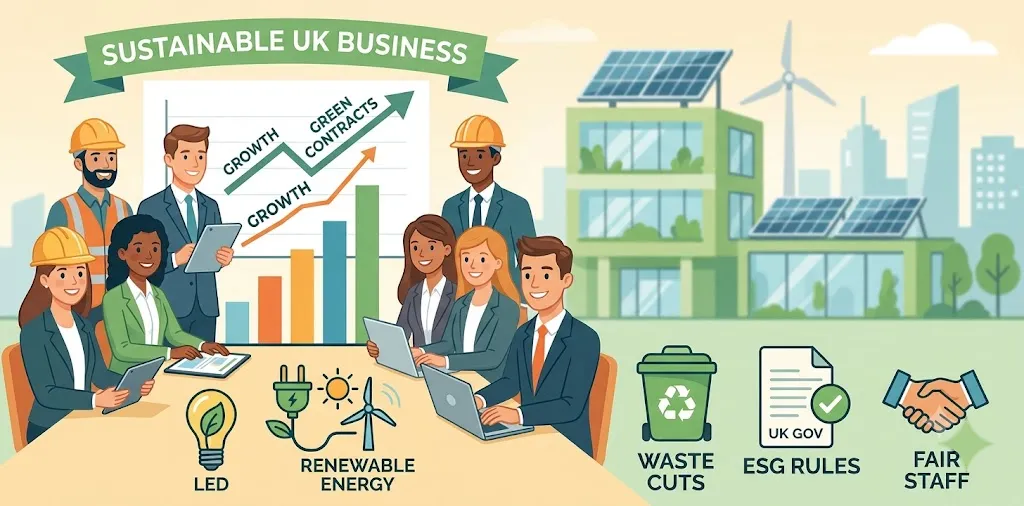
- Energy use: Switch off lights and run simple smart meters to track daily heating.
- Material waste: Recycling paper, plastic, and scrap metal using certified local waste services.
- Fair wages: Paying all staff at least the real UK Living Wage to boost loyalty.
Cutting Carbon and Energy Costs
Energy costs hit UK small businesses hard every month. Lowering your energy use helps the planet and saves you money right away. Start by changing old light bulbs to LED lights. LEDs use up to 80 percent less electricity and last much longer. You can also install smart thermostats to lower heating when the office is empty on weekends. Simple fixes like stopping draughts around old doors and windows make a big difference in winter.
When I checked my own small workshop two winters ago, I saw heat escaping through small gaps near the roof. We added basic foam seals that cost under fifty pounds. Our heating bill dropped by fifteen percent the next month. Small changes add up to big savings fast.
Here are four simple steps to lower your carbon output today:
- Contact your current power supplier and ask for a 100 percent renewable energy tariff.
- Upgrade old appliances and heaters to high-rated green models.
- Encourage staff to work from home one day a week or use public transport.
- Turn off all computer screens, tools, and printers at the end of the day.
If you want to read more about saving power, check out our related guide on green office upgrades.
Fair Work and Local Community Care
The social side of ESG means looking after people. Good businesses treat their workers well and help their local towns. In the UK, happy staff stay at their jobs longer. That saves you time and money on hiring new workers. Make sure your workplace is safe, clean, and friendly. Pay fair wages on time, and offer flexible working hours when possible. You can also support local charities by donating old equipment or giving staff time off to help local food banks.
A small printing shop I worked with in Manchester started buying paper only from local UK mills. They stopped using cheap overseas sellers. This change cut shipping pollution by half and created two new jobs in their local supply area. Local customers loved the change and bought more print jobs from them.
Try these simple ideas to help your staff and community:
- Offer extra training courses so staff can learn new skills.
- Create a simple wellness plan with free fruit and mental health support.
- Hire apprentices from local schools to give young people a fair start.
- Buy office supplies from local independent UK shops whenever you can.
Honest Management and Record Keeping
Governance means running your company with honesty and clear rules. Good management stops money leaks and builds strong trust with banks and customers. You need clear rules on how you handle customer data, pay your taxes, and report your green stats. Do not make fake green claims about your products. In the UK, the Competition and Markets Authority punishes companies that lie about eco benefits. Keep your green claims simple, true, and easy to prove with real numbers.
Keep your records simple and organized so you can show them to new buyers easily:
- Record monthly electricity and gas numbers in a basic spreadsheet.
- Keep receipts from certified waste removal companies for your annual safety checks.
- Write down clear safety rules for staff and review them once a year.
- Keep track of all staff pay rates and hours worked without missing entries.
To learn more about tracking your data, read our related guide on simple carbon accounting.
Frequently Asked Questions
Find quick and direct answers to the three most common questions UK business owners ask about ESG rules, green compliance, and lowering company carbon emissions today.
What is ESG compliance for a small business?
It means following basic rules to protect the environment, treat workers fairly, and run your company with clear, honest record keeping that UK buyers trust.
How do I start making my business green?
Start by measuring your current power use, switching to LED light bulbs, recycling waste properly, and choosing a renewable UK energy provider for your business premises.
Is ESG compliance expensive for UK companies?
No, starting with simple energy cuts and better waste habits saves money fast. Most basic green steps require very little cash to set up today.
Conclusion
Making your business green and following ESG rules is not as hard as it looks. You do not need expensive software or giant teams to make a real difference. Small steps like swapping light bulbs, paying fair wages, and keeping clean digital records build a stronger company. These steps cut monthly bills, protect the environment, and help you win lucrative contracts with top UK buyers who care about the planet.
My final expert tip is to start with one small change this week instead of trying to fix everything at once. Focus on your energy bill first, as it gives you the fastest cash savings. Once that works, move on to waste recycling and staff care. Talk to your team and get them excited about your new green goals. Take action today by downloading your latest energy bill and checking your power usage against this guide.