

Starting a new business is an exciting time. But money is often tight. If you run a small business in the UK, you might worry about how to pay your bills. You need cash to keep your doors open and grow your team. Many founders run out of money too fast. This happens because they do not plan their money well. You might feel stressed about taxes, cash flow, and finding funds. This guide will show you how to manage your cash like a pro. You will learn how to make a smart budget and keep your business safe. By the end of this post, you will know how to make your startup last. You will save time, reduce stress, and keep more pounds in your bank account. Let us dive into the best ways to handle your business money today so you can build a strong and healthy company.
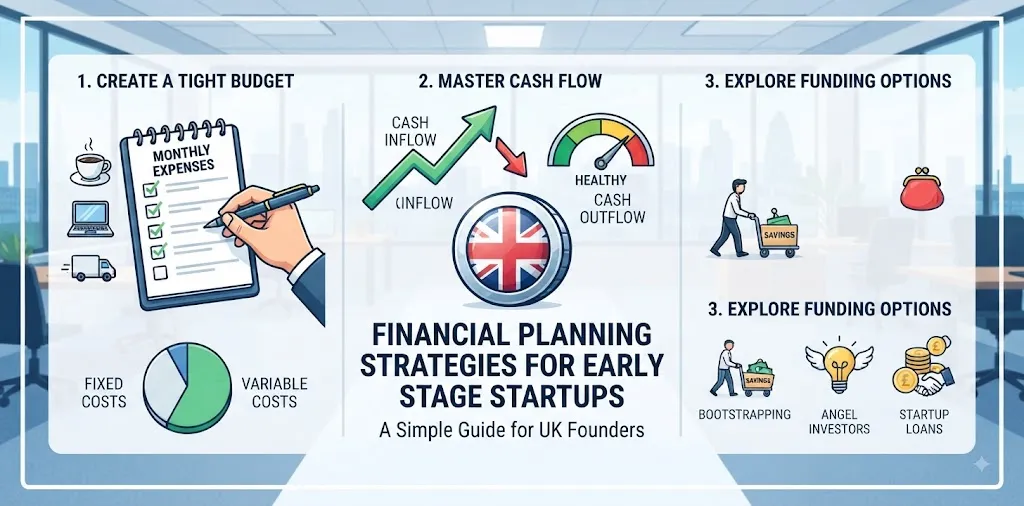
Financial planning strategies for early stage startups
Managing your early money is the key to startup survival. You must track every single pound that comes in and goes out.
Create a tight monthly budget
You must know where every coin goes. A budget helps you see your fixed and variable costs. Fixed costs stay the same each month, like office rent or software fees. Variable costs go up and down, like marketing ads and shipping supplies.
- List all your fixed monthly expenses first.
- Add up your expected sales for the next month.
- Cut any cost that does not help you make money right now.
When I started my first online shop, I spent too much on fancy logo design and high-end tools. I learned the hard way that I needed to watch every penny. Once I cut the fluff, my business survived its first shaky year.
You should also check out our related guide on how to track daily business costs to keep your budget even tighter.
Master your cash flow forecast
Cash flow is the lifeblood of your company. It is not just about the money you make on paper. It is about the actual cash sitting in your bank account. Many profitable UK startups fail because customers pay late while bills are due today.
- Track when invoices are sent and when they get paid.
- Keep a cash reserve to cover at least three months of bills.
- Send invoices right away and follow up on late payments fast.
A local baker in my town nearly had to close down because three big clients took sixty days to pay for catering. She learned to ask for a fifty percent deposit upfront. This simple change saved her bakery from going under.
Choose the right funding options
You need to know how to fund your early growth without losing control of your business. There are many ways to get money in the UK, such as bootstrapping, angel investors, or startup loans.
- Bootstrapping means using your own savings to fund the business.
- Angel investors give you money in exchange for a small share of the company.
- Government-backed startup loans offer lower interest rates for new founders.
Read our related guide on finding local grants and small business loans in the UK to see what you qualify for.
Plan for taxes and compliance
HMRC has strict rules for all UK businesses. If you ignore your taxes, you will face heavy fines. You need to set aside money for VAT and corporation tax every single month.
- Open a separate bank account just for your tax money.
- Hire a good accountant early to help you file on time.
- Keep all your digital receipts in one safe folder.
Frequently Asked Questions
Here are the top questions UK founders ask about startup money, answered fast.
How much money do I need to launch a startup in the UK?
You need enough to cover six months of living costs and business bills. Most small service startups can launch with under one thousand pounds.
What is the difference between profit and cash flow?
Profit is what is left after expenses. Cash flow is the actual movement of money in and out of your bank account right now.
How do I get a startup loan in the UK?
You must write a solid business plan and a cash forecast. Then apply through government-backed lenders like the Start Up Loans Company.
Conclusion
Managing your startup money takes hard work and daily focus. You now know how to build a tight budget, track your cash flow, and pick the best funding path for your business. Remember to keep your business money completely separate from your personal spending. This simple habit will save you hours of stress at tax time. Your next step is to open a dedicated business bank account today and write down your fixed costs for the month ahead. Stay focused on your goals, watch every single pound, and keep building your dream.