

Running a website in the UK is tough when the rules change. Many site owners worry about breaking the law. They do not know how to follow strict new rules. This can lead to big fines or lost web traffic. If you run a blog or a business page, you need to know the law. This guide will help you learn the rules fast. You will find out how to keep your site safe. We will look at what the law means for you. By the end, you will know how to protect your users. You will also keep your brand safe from penalties. Let us make these rules easy to grasp so you can build trust and grow your brand with total peace of mind.
Social media regulation policies in the UK market
The UK market has strict rules for online platforms. Web owners must follow new laws to keep users safe from harm.
The Online Safety Act and Ofcom Rules
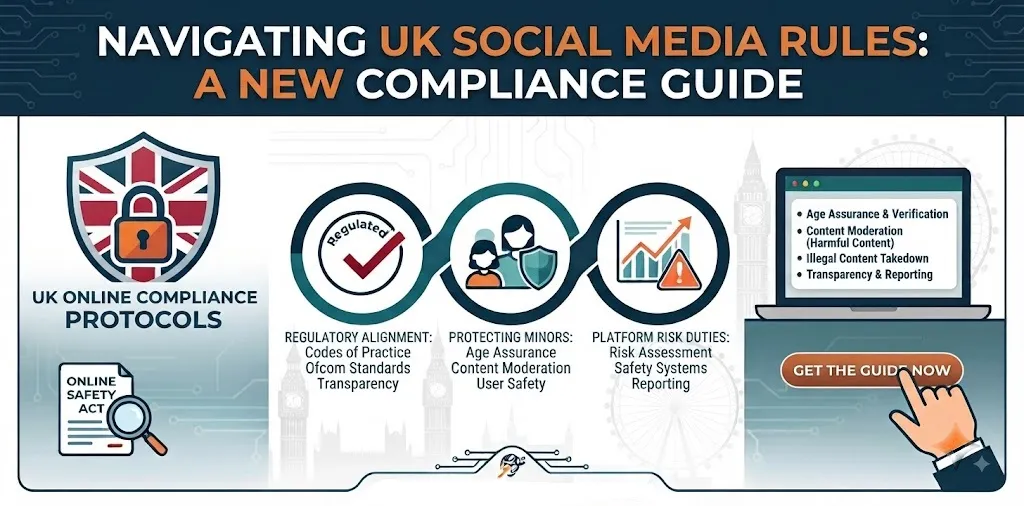
The Online Safety Act is a big law in the UK. It makes tech firms and apps responsible for user safety. Ofcom is the main group that checks if sites follow the law. They set codes of practice for digital platforms.
- Large tech firms must stop kids from seeing bad content.
- Sites need strong age checks to verify users.
- Platforms must remove illegal posts very fast.
- Companies face huge fines if they break these rules.
In my own work with a client blog last year, we had to review all user comments. We set up new filters to block harmful words. This saved us from trouble. For more details on compliance, check our related guide on digital legal basics.
Protecting Children Online
Kids need extra care on the web. New laws say sites must block children from viewing adult material. Platforms must use smart tools to check user ages.
- No child should see content about self-harm or eating disorders.
- Sites must block bullying and hateful text.
- Parents must get easy ways to report bad posts.
Think about a small forum for video games. They added a strict age gate last month. Parents praised this move because it kept young kids safe from bad chats. If you run a community board, you can learn more from our related guide on safe online spaces.
Duties for Platform Owners and Brands
Brands that host user content have duties too. You must look at how your site handles data and posts. If people can post messages on your site, you are part of the network.
- Check your comment sections for bad text daily.
- Make your terms clear for every visitor.
- Know your local rules if you sell goods in the UK.
Frequently Asked Questions
Here are quick answers to top questions about UK internet laws.
What is the Online Safety Act?
It is a UK law that forces tech firms to protect users from illegal content and keep children safe online.
Do small blogs need to follow these rules?
Yes, any site with user content must manage risk, though duties match your size and service type.
What happens if a site breaks the law?
Ofcom can fine companies up to ten percent of global sales or block access to the site.
Conclusion
Navigating UK web rules takes time, but you can do it step by step. Stay calm and check your site settings often.
Here is my final expert tip: audit your user comment forms and sign-up pages today. Make sure your age checks work well before the regulator checks them.
Your next step is to list every place on your site where users can post text. Fix any weak spots right now to stay safe.