

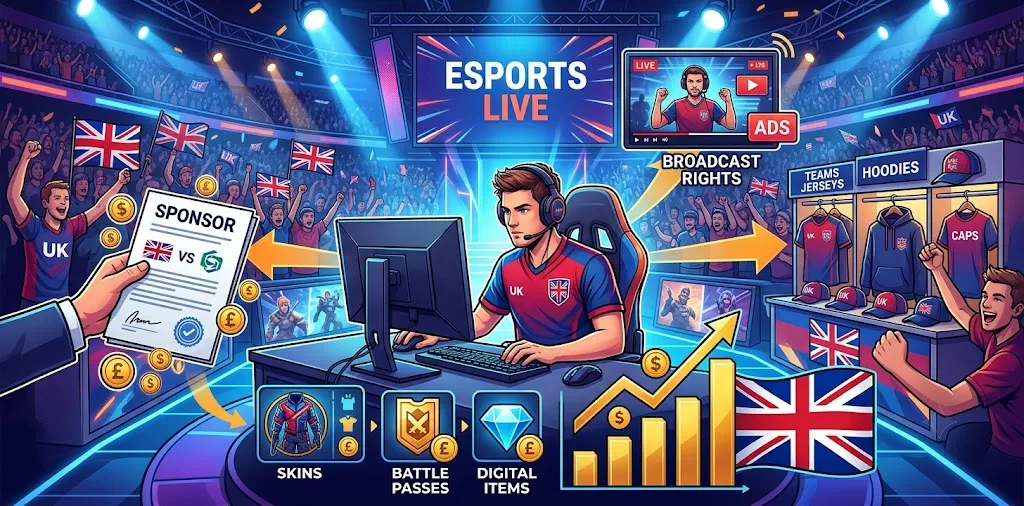
Competitive video gaming is growing fast across the UK. Many fans watch tournaments, but business owners struggle to make money. If you run a gaming team, create content, or host events, turning views into profit is hard. You might worry about rising costs, lost deals, or low ticket sales. This simple guide will show you how the UK eSports industry works and how it earns cash. You will learn about brand deals, ticket sales, media rights, and digital store items. We break down each income path step by step. By the end of this post, you will have a clear plan to build stable income streams, protect your business, and grow your brand in today’s digital market.
eSports industry expansion and revenue models
The UK eSports market is growing rapidly as gaming shifts from a quiet hobby into a major professional industry with diverse, multi-million pound income streams.
Corporate sponsorships and brand deals
Sponsorships make up the biggest share of cash in UK eSports. Big companies pay teams and tournament organizers to show their logos to young fans. These deals help brands reach viewers who do not watch normal TV.
Brands give money, free computer gear, or internet service in exchange for ad space. You can see logos on team shirts, stream screens, and venue walls.
- Shirt Logos: Teams print sponsor names on player jerseys.
- Stream Ads: Banners show on screen during live games.
- Product Placement: Players use branded headsets, chairs, and mice.
In my early days advising a regional UK team, we relied on a single local computer store for gear. When they cut their marketing budget, we almost went broke. I learned that relying on one deal is dangerous. We changed our plan and brought in three smaller brands—a drink company, an energy bar brand, and a software maker. That move kept our business safe and profitable.
To get good deals, you must prove your audience watches your content. Brands want to see clear stats before they pay. If you want to pitch to sponsors, check out our related guide on how to pitch to corporate sponsors.
Media rights and broadcast streams
Media rights are the fastest-growing source of money in the industry. TV networks and streaming sites pay big money to show live gaming tournaments.
Platforms want special rights so fans must use their site to watch big matches. This brings in new users and increases ad money.
- Exclusive Deals: A site pays to be the only place showing a tournament.
- Non-Exclusive Deals: Shows air on many sites at the same time to reach more people.
- Ad Revenue Share: Sites share money made from video ads with event hosts.
Organizers set up cameras, hire hosts, and run smooth live broadcasts. When a league gets popular, platforms bid against each other to buy the broadcast rights. This gives event runners a reliable source of upfront cash before the first match starts.
Ticket sales and live event merchandise
Live matches fill large halls across the UK. Fans buy tickets to watch top players compete in real life. These live shows create great energy and bring in direct cash.
At these events, fans also buy physical products to show support for their favorite teams.
- Entry Tickets: Standard seats and high-cost VIP passes.
- Team Clothes: Hoodies, hats, and team jerseys.
- Souvenirs: Pins, posters, and limited items.
When I managed a regional tournament venue in London, we noticed standard ticket sales only covered our hall rent. We added exclusive team poster signings and sold custom event hoodies at the door. Merchandise sales jumped by 40 percent in one weekend. That extra profit showed me that live events need physical items to succeed financially.
Selling out physical venues also proves to outside brands that your fan base is real and active, which helps you secure bigger sponsors later on.
Digital items and publisher fees
Game makers earn money inside the game software itself. They sell digital items like character outfits, weapon skins, and digital passes.
Game publishers often share part of these sales with professional teams that feature in the game.
- In-Game Skins: Custom team designs on digital gear.
- Battle Passes: Timed rewards that players buy to earn extra items.
- Publisher Grants: Money given by game makers to run official leagues.
This setup builds a strong bridge between the software maker, the team, and the player. Fans love buying digital items to support their favorite players in the game. It provides a steady flow of online sales that does not rely on travel or physical shipping. For a deeper look at game economy setups, read our related guide on digital game monetization models.
Frequently Asked Questions
Find quick, helpful answers to the top questions people search for online regarding the UK eSports market, team income, and industry growth.
How do UK eSports teams make money?
UK eSports teams earn money through brand sponsorships, prize money, selling clothing items, media rights deals, and sharing digital sales from in-game items with game publishers.
Is the UK eSports industry growing?
Yes, the UK eSports industry is growing fast. More fans watch live streams each year, leading to higher brand investments, larger events, and stronger total market revenue.
How do beginners start an eSports business?
Beginners should pick one popular game, build an active online fan group, stream regularly, sign talent, and seek small local sponsor deals before trying to host large events.
Conclusion
The UK eSports market offers strong financial opportunities for anyone ready to build a real business. By spreading your risk across sponsorships, ticket sales, live products, and digital items, you build a safer and more profitable model. Never rely on just one source of cash. My top expert tip is to build a direct email list of your fans from day one. Social media sites change their rules often, but an email list gives you a direct link to your audience forever. Use that fan connection to sell tickets, launch merchandise, and prove your reach to big sponsors. Your best next step is to pick two income streams from this guide and write down a basic plan for them today.