

Do you feel busy all day but get nothing done? Many people in the UK struggle to finish work tasks. You start your morning with big plans. Then, emails pop up. Phone calls happen. By 5 PM, your desk is still full of paper. This problem causes stress and long working hours. It stops you from enjoying your free time.
The good news is that you do not need more willpower. Willpower is like a battery. It runs out by lunchtime. Instead, you need automatic daily actions. This guide shows you how to set up small mental loops. These loops make good work habits automatic. By using this simple method, you will save hours every week. You will finish your main tasks early. Best of all, you will leave work on time with a clear mind.
How to Build Habit Loops for Long Term Productivity
Learn how brain loops work so you can set up simple daily steps, stop procrastination, and get more work done each day.
Understanding the Three Parts of a Habit Loop
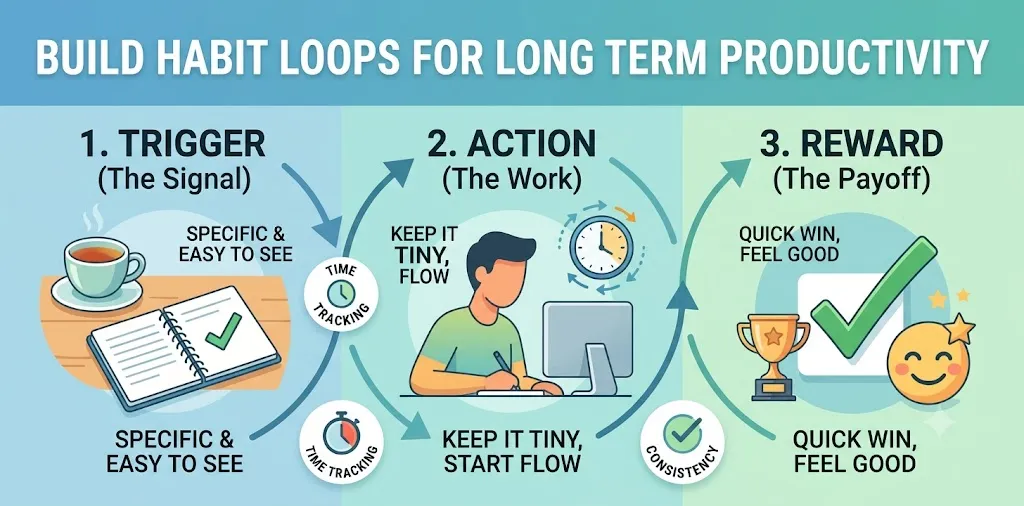
Every daily habit follows a simple three-step cycle inside your brain. First comes the trigger, which is a signal that tells your brain to start. Second comes the action, which is the actual task you perform. Third comes the payoff, which is the good feeling or prize you get after finishing.
When I worked with an office team in Manchester, they were always late with reports. We looked at their afternoon routine. We found they had no clear start signal. They just tried to force themselves to write at 2 PM. Once we added a clear signal, like finishing a cup of tea, their output doubled.
To make this work for your daily job, keep these points in mind:
- Choose a clear visual trigger, like setting your desk notepad open.
- Keep the action small so your brain does not resist it.
- Give yourself a quick prize, like a five-minute walk outside.
When you repeat this cycle, your brain builds a strong path. The work moves from hard effort to automatic action. You spend less time worrying and more time finishing tasks.
Setting Up Clear Triggers to Start Your Work
A trigger is the spark that starts your action loop. Without a good spark, you will waste time wondering what to do next. Good sparks are specific and tied to things you already do every day.
For example, do not say, “I will write emails in the morning.” That idea is too soft. Instead, say, “After I put my water glass on the desk, I will open my email inbox.” The physical object acts as a helpful reminder for your brain.
Here are three types of triggers you can use:
- Time triggers: “At 9 AM, I start my main project.”
- Location triggers: “When I sit on the train, I read my work book.”
- Event triggers: “After the morning team meeting, I clear my desk.”
If you struggle with starting, read our [Internal Link: Guide to Morning Routines for Remote Workers] to set up your environment for success. Strong triggers take away the need to make hard choices early in the morning.
Making the Action Easy to Prevent Procrastination
When a job feels too big, your brain wants to run away. You open social media or brew another cup of tea instead. To stop this problem, make the first action tiny.
I tested this idea with a freelance writer who could not start her daily articles. She set a simple rule: write just two sentences after her morning tea. Most days, once she wrote those two lines, her brain got into the flow. She kept writing for an hour without stopping. The hard part is always the start line.
Use these tips to lower the barrier:
- Break big tasks into five-minute chunks.
- Remove distractions before you start work.
- Put your work tools on your desk the night before.
When the first step is easy, fear goes away. You build momentum without feeling stressed or tired.
Using Immediate Rewards to Lock in the Habit
Your brain loves rewards. If an action feels good, your brain wants to do it again tomorrow. However, many people pick rewards that are too far away, like a pay raise at the end of the year. Your daily brain loop needs a quick prize right after the action.
The prize does not need to be big. It just needs to mark the task as complete.
- Check off the box on your paper list with a bright marker.
- Take two minutes to stretch and breathe deeply.
- Drink your favorite herbal tea only after finishing the task.
Over time, your brain links the work action with the happy feeling. The task itself starts to feel good. This is how long-term consistency happens naturally without struggle.
Tracking Progress and Adjusting Your Daily Loops
You must track your actions to make sure they stick. What gets measured gets done. A simple paper calendar on the wall works best for most people. Put a big red mark on each day you complete your loop.
Do not worry if you miss a single day. Life happens, and schedules break. The key rule is to never miss two days in a row. Missing one day is just a mistake. Missing two days starts a new bad habit loop.
Check your system every Friday afternoon:
- Look at your red marks on the calendar.
- Ask if your triggers were easy to see.
- Change any step that felt too hard or boring.
For more tips on staying organized over time, see our [Internal Link: Ultimate Guide to Daily Time Blocking]. Regular checks keep your habits strong for months and years.
Frequently Asked Questions
Find quick, direct answers to the most common questions people ask about building habits, saving time, and staying focused at work every day.
How long does it take to form a new habit loop?
It takes about 66 days on average to build a new automatic habit. Simple tasks take less time, while complex work tasks need more daily repetition.
What is the fastest way to break a bad work habit?
Change the middle action step while keeping the same trigger and reward. Replace negative actions, like checking news, with positive actions, like doing a quick physical stretch.
Can you build more than one habit loop at a time?
No, build only one habit loop at a time. Focusing on a single daily change stops mental overload and helps you stick with the new routine long term.
Conclusion
Building strong habit loops is the best way to boost your daily output without extra stress. By setting up clear triggers, keeping your initial steps small, and adding quick rewards, you turn hard work into automatic routines. You no longer have to rely on weak willpower to get through your busy task list.
My final expert tip is to start smaller than you think you should. Pick just one tiny habit today, like writing your daily task list right after your morning coffee. Focus on that single action for the next two weeks before adding anything new. Small steps lead to big long-term success.