

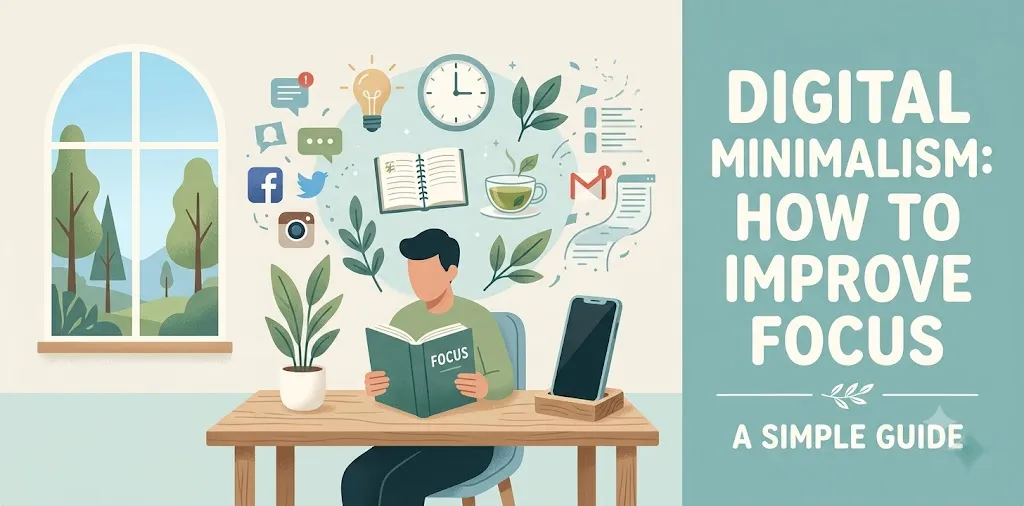
Too many screens make our brains feel full and tired. You look at your phone to check the time, but thirty minutes later, you are still scrolling. Notifications ping all day long, taking you away from your real work. This constant switching makes you feel stressed and unfocused.
You can fix this problem with digital minimalism. This means using technology with a clear purpose instead of letting it control your life. In this guide, you will learn easy steps to clean up your digital life, stop distractions, and protect your mind. By following these simple habits, you will save hours of time each week and get your concentration back. You will feel calm, accomplish more at work, and enjoy your free time without feeling tied to a screen.
Digital Minimalism Strategies to Improve Focus
Digital minimalism helps you clear away online clutter so you can focus on work that matters, lower your stress, and spend more time in real life.
Clean Up Your Phone Screen
Your phone screen is built to steal your attention. Bright colors and small red badges make you want to tap on app icons all day. To fix this, remove every app from your main screen except for four basic tools. Keep items like your phone dialer, maps, notes, and calendar. Move everything else into a search folder or hide it completely.
When I tried this on my own phone, my daily screen time dropped by one whole hour within three days. I stopped opening apps without thinking because they were no longer staring at me.
- Turn off every notification that is not from a real human being.
- Change your screen settings to grayscale mode so the bright colors do not pull your eyes in.
- Delete social media apps from your phone and only check them on a computer.
- Keep your home screen background completely plain and black.
Making it harder to open apps breaks the automatic habit of tapping your screen. When you have to search for an app by name, you stop and think if you really need to use it. This simple gap gives your brain time to make a better choice.
Set Clear Boundaries for Checking Emails and Messages
Checking your inbox every ten minutes breaks your concentration into small pieces. It takes your brain nearly twenty minutes to get back into deep focus after a single interruption. Instead of answering messages as soon as they arrive, set specific times during the day to look at them.
For example, you can check your inbox at ten in the morning and four in the afternoon. Let your team know about this schedule so they do not expect an answer right away.
- Close your email program while you are working on big projects.
- Set an automatic reply that tells people when you check your inbox.
- Use phone calls for urgent matters instead of chat apps.
If you want more ideas on managing your workday, read our [guide on setting healthy work-from-home boundaries]. Setting clear rules stops you from reacting to other people’s needs all day long. You get to control your time and finish your most important jobs first.
Create Tech-Free Zones in Your Home
Your brain connects places with habits. If you answer work emails in bed, your mind will stay active when you try to sleep. You need to pick areas in your house where no phones, tablets, or laptops are allowed. The bedroom and the dining table are the two best places to start.
A friend of mine placed a simple basket by her front door. Everyone in her family put their phones in the basket at six in the evening. Within two weeks, her family talked more during dinner and slept much better at night.
- Buy a real alarm clock so your phone does not sit on your nightstand.
- Leave your phone in another room while eating meals with family or friends.
- Designate a comfortable reading chair where no screens are ever permitted.
Protecting these spaces lets your mind rest and recharge. When you remove devices from relaxation areas, your body learns to calm down much faster.
Practice Intentional Tech Breaks
Taking a complete break from optional technology helps reset your habits. Pick a period, like thirty days or even just one weekend, to stop using extra digital tools. Cut out news sites, online shopping, streaming video, and social media.
During this time, fill your extra hours with real-world activities. You can read physical books, walk in a park, cook meals, or meet friends in person.
- Write a list of fun offline activities before you start your break.
- Tell your friends you are taking a break so they do not worry when you do not reply online.
- Keep a paper notebook to write down thoughts when you feel the urge to check a screen.
After your break ends, do not bring back all your old habits. Only add back tools that bring true value to your life. For extra advice on building good habits, check out our [guide on planning a successful digital detox]. You will see that you do not miss most of the apps you used to spend hours on every day.
Frequently Asked Questions
Find quick and clear answers below to three common questions about cutting down screen time, building focus, and sticking to your new digital habits every day.
How do I stop checking my phone as soon as I wake up?
Put your phone in another room before going to bed. Use a basic alarm clock to wake up so you do not reach for a screen first thing in the morning.
Will digital minimalism hurt my work performance?
No, it will help you work better. By closing chat apps and email tabs, you focus deeply on major tasks and finish higher quality work in far less time.
How do I deal with fear of missing out when offline?
Remember that most online news and updates do not impact your daily life. Focus on what is right in front of you, and trust that important news will reach you.
Conclusion
Taking control of your digital life is not about throwing away your tech. It is about choosing which tools serve you and which ones waste your time. When you remove useless apps, quiet your notifications, and set simple screen limits, you gain back your attention span and your peace of mind.
Start small so you do not feel overwhelmed. Pick just one strategy from this guide to try today, like moving your phone charger out of the bedroom or setting two specific times for checking email. Once that feels easy, pick another habit to build. Small choices add up to big changes in how you feel each day. For your next step, pick your one rule right now, write it down on a piece of paper, and put it on your desk where you can see it.