

Are you worried about where the UK economy is going right now? You are not alone. Rising energy bills, sticky inflation, and steady interest rates make it hard to plan your money. Small business owners face higher costs, and families feel the squeeze at the grocery store. It is easy to feel stuck when market news changes every week.
This guide makes sense of the numbers for you. We break down complex financial trends into plain facts you can actually use. You will learn what the current Bank of England rates mean for your home loan. You will also see how price rises affect your weekly spending and where new business opportunities are growing. By the end of this page, you will have a clear, step-by-step plan to protect your savings and grow your business today.
UK economic outlook and market trend analysis
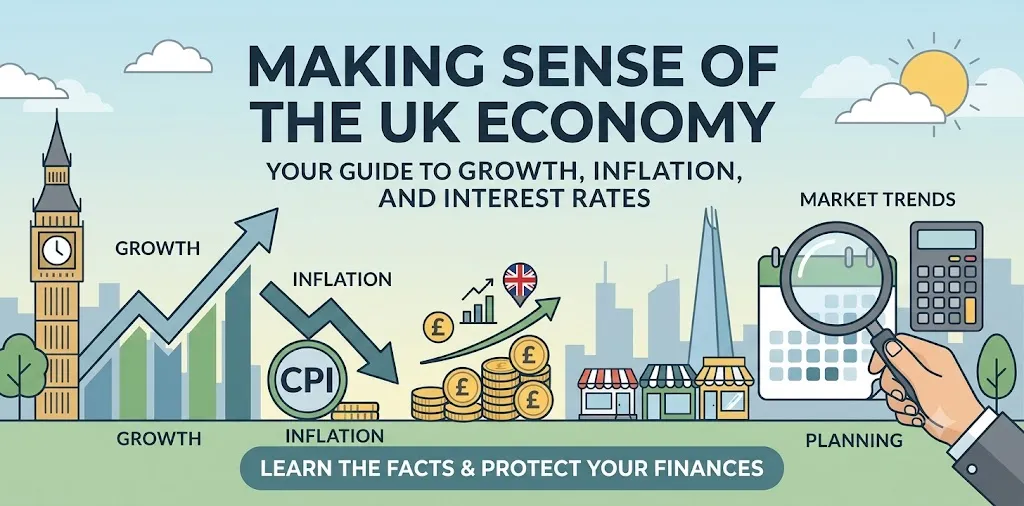
The UK economy is moving slowly with modest growth, higher energy costs, and elevated interest rates. Here is your breakdown of current market trends and what they mean for you.
Gross domestic product and general growth trends
Gross Domestic Product, or GDP, measures the total value of all goods and services made in the UK. Right now, UK economic growth is slow. Forecasters project GDP growth to stay around 0.7% to 1.0% this year. That means the economy is growing, but at a very gradual pace. Global events and high energy costs continue to put pressure on local trade.
Last month, I sat down with a local shop owner in Manchester who sells office supplies. He told me that sales have been steady, but customers are buying fewer high-ticket items. His experience reflects the wider national trend. People are still spending money, but they are far more careful with their choices.
- Service sector strength: IT, legal, and business services continue to drive most of the national growth.
- Manufacturing slowdown: High factory power bills make it harder for local makers to expand.
- Consumer caution: High living costs mean households prioritize essentials over luxury purchases.
To keep your finances safe during periods of slow national growth, read our guide on how to build a budget buffer.
Inflation rates and consumer price changes
Inflation tracks how fast the price of everyday items goes up over time. The Consumer Prices Index (CPI) shows inflation sitting around 3.3% to 3.5%. This rise is mostly caused by global energy market shocks and higher transport fuel costs. When energy costs go up, businesses raise their prices to cover their expenses.
During a recent trip to my local supermarket, I noticed that basic food items like bread, milk, and butter cost noticeably more than they did last year. My weekly shop bill has gone up by nearly fifteen pounds, even though my shopping basket contains the exact same items.
- Energy bills: Fluctuating oil and gas imports keep domestic heating and electricity costs high.
- Food prices: Supply chain friction and import costs push up farm-to-shelf prices.
- Wage pressure: Workers are asking for higher pay to match living costs, which keeps service prices elevated.
Bank of England base rate and borrowing costs
The Bank of England uses the base interest rate to control inflation. The Bank Rate currently stands at 3.75%. Central bankers are choosing to keep rates on hold rather than cutting them quickly. They want to make sure high prices do not become permanent before making borrowing cheaper.
A friend of mine recently renewed her fixed-rate mortgage after five years. Her monthly payments jumped by over two hundred pounds overnight. That extra cost forced her family to cut back on eating out and weekend trips. Higher borrowing costs hit real budgets hard.
- Fixed mortgage deals: Homeowners facing renewal will see higher monthly bills than past years.
- Credit card rates: Consumer loans and debt interest remain high, making borrowing expensive.
- Saver rewards: Higher bank rates mean cash savings accounts earn better interest returns.
If you are looking to secure a better home loan rate in this market, check out our guide on how to fix your mortgage rate early.
Employment trends and worker wage growth
The UK job market is softening gradually. Unemployment sits near 5.0% to 5.3%, while job vacancies have decreased. Many companies are choosing to hold off on new hiring until the economy picks up speed. At the same time, real wage growth is flat because price rises eat up wage gains.
I worked with a small digital marketing agency in Leeds that had three open roles last year. This year, they paused hiring altogether to cover rising workplace pension and power costs. Many small firms are making the exact same choice to protect their cash flow.
- Younger job seekers: Entry-level positions are harder to find as firms cut back graduate roles.
- Tech and health demand: Software development, green technology, and healthcare still face worker shortages.
- Flexible work patterns: More workers are taking on hybrid roles or freelance work to boost monthly income.
Frequently Asked Questions
Understanding the current market helps you make smart choices. Here are clear answers to the top questions UK households and business owners ask today.
Will interest rates drop in the UK this year?
The Bank of England is keeping the base rate around 3.75% to control inflation. Major rate cuts are unlikely until energy prices stabilize and inflation stays near the 2% target.
Is the UK economy going into a recession?
Most market forecasts predict slow growth rather than a full recession. GDP growth remains small but positive, led by strong activity in tech and professional services.
How can I protect my savings from inflation?
Look for high-yield savings accounts or fixed-rate Cash ISAs that match or beat current inflation rates. Moving idle cash out of standard current accounts prevents loss of purchasing power.
Conclusion
Navigating the UK economic outlook requires patience and clear planning. While slow growth and high energy bills present real challenges, key sectors like business services and technology continue to show strong resilience. Higher interest rates also mean that cash savings can earn solid returns if you place your money in the right accounts.
Here is my expert tip: audit your regular outgoings today. Review your fixed costs, shop around for lower utility packages, and shift extra savings into high-interest accounts to offset inflation. Do not wait for market conditions to shift on their own.