

Are you working in the gig economy in the UK? Do you drive for apps, deliver food, or do freelance tasks on your phone? If yes, you might wonder about your rights. Many UK workers face low pay, long hours, and no sick leave. It can feel hard to know where you stand when rules change so fast. This guide will help you understand gig work today. You will learn what laws protect you and how to keep more money in your pocket. We will look at real trends, worker rights, and tips to help you thrive. By the end of this post, you will know how to protect yourself on the job and make better choices for your daily work life. Let us dive right in and look at what is happening in the UK right now.
Gig Economy Trends and Worker Rights in the UK
The UK gig economy is changing fast. More people now rely on app-based work to pay their bills, but new laws and court cases are trying to give these workers better safety, fair pay, and basic job benefits.
The Rise of App-Based Work and Flexible Jobs
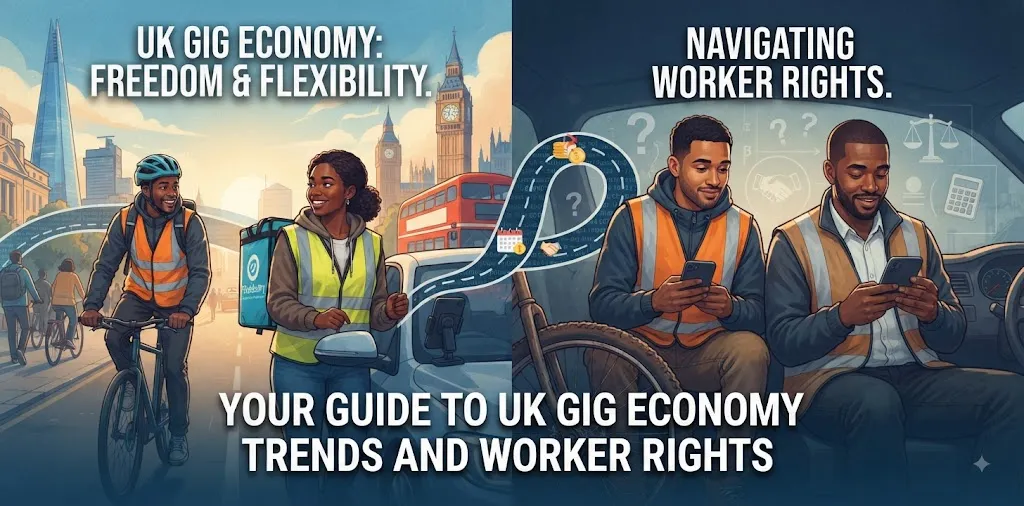
Gig work has grown a lot across the UK. Millions of people now pick up tasks using apps on their phones. You might drop off hot meals, drive people across town, or write code from your kitchen table. The main draw is flexibility. You choose when you work and how long you stay online.
However, this freedom often comes with big costs. When you work for yourself as a sole trader, you do not get a fixed salary. If your app goes down or no one orders food, you earn zero pounds for that hour.
- Flexibility: Work the hours you want.
- Insecurity: No guaranteed pay or hours.
- Isolation: You work alone with no boss to talk to.
I once talked to a delivery rider in central London named Dave. He told me he used to work fifty hours a week across three different apps just to cover his rent and fuel. One week, his bike broke down. Because he had no sick pay or holiday pay, he made almost nothing and struggled to buy groceries. That personal story shows why real worker protections matter so much.
Legal Status and Worker Classification Explained
In the UK, your legal status decides what rights you have. Many big tech firms call their staff independent contractors or self-employed workers. This label helps companies save money because they do not have to pay the national minimum wage or holiday pay.
Yet, UK courts have started to push back. Landmark legal rulings have shown that many app workers are actually “workers,” not self-employed businesses. If you must follow strict rules set by an app, you might legally be a worker. That means you have rights to holiday pay and rest breaks.
- Employee: Full rights, sick pay, and a pension.
- Worker: Some rights, holiday pay, and minimum wage.
- Self-Employed: Total control, but zero safety nets.
For a deeper dive into these legal definitions, check out our related guide on UK employment status rules.
Pay and the National Minimum Wage Debate
Getting paid fairly is a huge issue for gig workers. Many people find that after they pay for fuel, car insurance, phone data, and bike repairs, their actual take-home pay is way below the legal UK minimum wage.
Some delivery apps pay per drop instead of by the hour. If traffic is bad or a restaurant takes too long to prep food, a worker might spend forty minutes on a job that pays only three pounds. That is far below what a standard job pays for the same amount of time.
Trade unions are fighting hard to change this. They want all gig platforms to guarantee the national living wage for every active minute a worker spends on the app.
Holiday Pay and Sick Leave Rights
One of the biggest problems with gig work is the total lack of paid time off. If you catch the flu or break a bone, you stop earning money immediately.
Recent UK court battles have forced some major firms to start offering holiday pay to their drivers and couriers. This is a step forward, but it is often hard to claim. Workers usually have to log exact hours and fill out complex forms to get the money they earned while taking a break.
- Holiday Pay: Now available on some platforms based on hours worked.
- Sick Pay: Still very rare for standard gig platform workers.
- Pensions: Auto-enrollment is slowly moving into the gig sector.
The Impact of New Regulations and Government Policy
The UK government is under pressure to clean up the gig economy. New rules are being proposed to make sure algorithms treat workers fairly. Right now, if an app deactivates your account by mistake, you might lose your job in seconds with no way to appeal.
Proposed laws aim to create a single enforcement body. This group would check that gig companies follow labor laws and treat people with respect. It would also stop unfair contract terms that trick workers into giving up their basic legal rights.
If you want to learn more about how to protect your income and plan for taxes as a freelancer, read our related guide on UK self-employed tax tips.
Frequently Asked Questions
Here are three common questions about UK gig work and clear answers to help you.
Are UK gig workers legally entitled to holiday pay? Yes, many platform workers are now classified as workers, meaning they can claim holiday pay based on the time they spend logged into apps.
Can gig apps ban or deactivate my account without a reason? Yes, apps often use automated systems to ban workers, but new rules are pushing for fair human reviews and clear reasons for job loss.
Do I need to pay UK tax if I work for delivery apps? Yes, if you earn over one thousand pounds a year from side hustles, you must register as a sole trader and file a tax return.
Conclusion
The UK gig economy offers great flexibility, but it also brings real risks to your income and job security. Understanding your legal rights helps you stay safe and get the fair pay you deserve. Always track your expenses, know your worker status, and keep an eye on changing laws.
As a final expert tip, you should always keep a daily log of your miles, app login times, and expenses in a notebook or phone app. This makes tax season easy and proves your true earnings.