

Starting a small business in the UK is hard. Many founders run out of money before they can make a profit. You might feel stuck, tired, and unsure of how to grow your team without spending too much cash.
This guide gives you a simple plan to grow your business fast without making big financial mistakes. You will learn how to test your product, hire cheap help, and use smart tools to automate daily work. By following these easy steps, you will keep your costs low while your sales go up. Let us get started on building a strong company today.
How to Scale a Lean Startup Model Efficiently
Scaling means growing your revenue much faster than your cost base. Here is how you can expand your UK startup quickly, save money, and avoid costly early errors.
Test Your Idea in the Market First
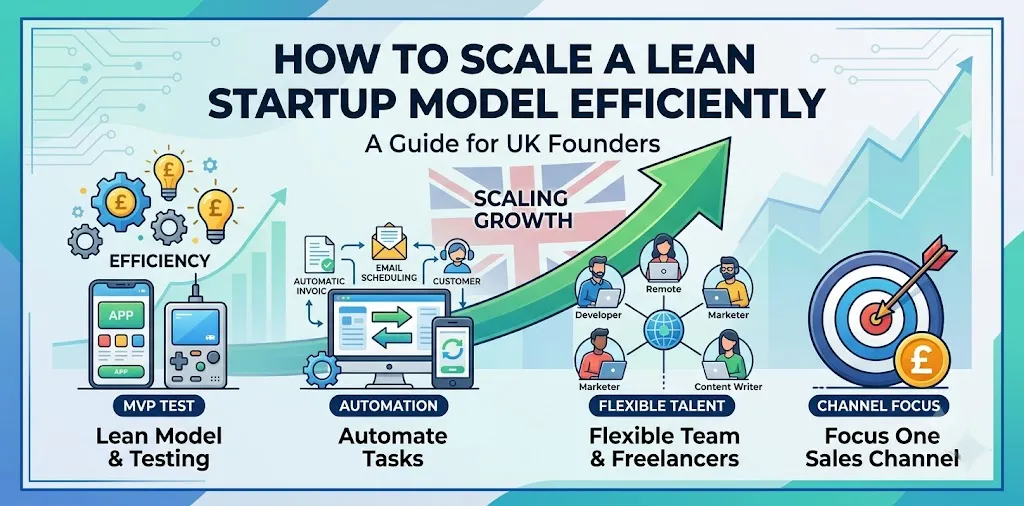
Before you spend thousands of pounds on new products, test your basic ideas with real buyers. Many UK founders waste time building full platforms that nobody wants. Instead, build a bare-minimum product. Show it to ten target customers and ask them to buy it. Their feedback will tell you what to fix before you spend real money.
In my first e-commerce venture based in Manchester, I bought £500 worth of stock to test local demand. I created a basic website in one evening. I sold out in three days. That tiny test proved that people wanted my goods. It gave me the confidence to buy more stock without taking a massive loan.
- Set up a simple landing page to collect email addresses.
- Run small social media ads targeting UK buyers.
- Ask early users for honest feedback about your prices.
If you want to read more about validating product ideas, check out our related guide on simple market testing.
Automate Daily Tasks to Save Time
When you scale up, manual work will slow you down. You cannot spend your day typing out invoices or answering the same customer service emails. You need simple software tools to handle repetitive jobs. This keeps your operating costs low while your order volume grows.
Focus on fixing these main areas:
- Accounting: Use software to log receipts and handle VAT automatically.
- Marketing: Schedule your social posts two weeks in advance.
- Support: Create a clear help page on your site to answer common buyer questions.
When I ran a small consulting firm in London, we spent ten hours a week sending client invoices. We switched to an automatic billing app. It saved us forty hours every month. That free time allowed us to sign three new clients without hiring an extra manager.
Hire Freelancers Instead of Full-Time Staff
Hiring permanent workers in the UK comes with extra costs like National Insurance, pensions, and office space. When you are trying to stay lean, these fixed costs can break your bank account. Use freelancers or remote workers for special tasks like web design, copywriting, or tax prep instead.
- Pay people only for the exact project hours you need.
- Avoid long-term office lease payments by letting staff work from home.
- Use trustworthy UK freelance platforms to find skilled help fast.
By keeping your team flexible, you can scale up during busy seasons and scale down when sales slow down. This strategy keeps your business safe from bad cash flow problems.
Focus on One Main Sales Channel
Trying to sell on every platform at once will drain your budget fast. Pick one main channel where your UK customers already hang out. Master that single channel before you try anything else.
- B2B Startups: Focus on direct outreach via email or professional networking sites.
- B2C Startups: Focus on short video content or local search ads.
Track your customer acquisition cost closely. If a channel brings in cheap leads that turn into paying clients, double down on it. Do not waste money on fancy brand campaigns until you have steady revenue coming in every week.
For more tips on finding cheap leads, see our related guide on low-cost customer growth.
Frequently Asked Questions
Got questions about growing your UK business on a tight budget? Here are clear, direct answers to the most common queries founders ask online every day.
How do I know when my startup is ready to scale?
You are ready when customers buy your product repeatedly, you make a clear profit on each sale, and your current team cannot handle any more incoming orders.
What is the biggest mistake lean startups make when growing?
The biggest mistake is spending money too fast on big offices, full-time staff, and expensive ads before proving that customers actually want to buy your main product.
How do I fund my business growth without taking on debt?
Fund your growth by using money from your early sales, negotiating longer payment terms with suppliers, and keeping your daily overhead costs as low as possible.
Conclusion
Scaling a lean startup does not require millions of pounds in funding. It requires focus, low overheads, and a commitment to testing your ideas before spending big money. By using smart tools, hiring flexible freelancers, and focusing on one clear sales channel, you can grow your UK business safely and quickly.
My final expert tip for you is to review your expenses every month. Cut any tool, service, or ad campaign that does not directly bring in revenue or save you time.
Your next step right now is simple. Pick one task you do manually every day, like scheduling emails or tracking invoices, and set up an automated tool to handle it by the end of this week. Keep your business light, stay flexible, and focus on delivering real value to your UK clients every single day.