

Energy bills in the UK remain high, and many adults worry about the cost of heating their homes each winter. At the same time, the rules around home energy, petrol cars, and green grants are changing fast. It can feel confusing to keep up with every new law and government choice.
This clear guide breaks down the main UK energy rules in plain English. You will learn how new power projects work, what cash grants you can claim today, and how these green choices lower your monthly bills. By reading this guide, you will gain full control over your home setup, save money on your power, and take part in a cleaner future with confidence.
Sustainable Energy Transition Policies in the UK
The UK aims to cut green gas emissions and power every home with clean energy. These top policies explain how the nation plans to reach net zero by 2050.
Clean Power Generation and Great British Energy
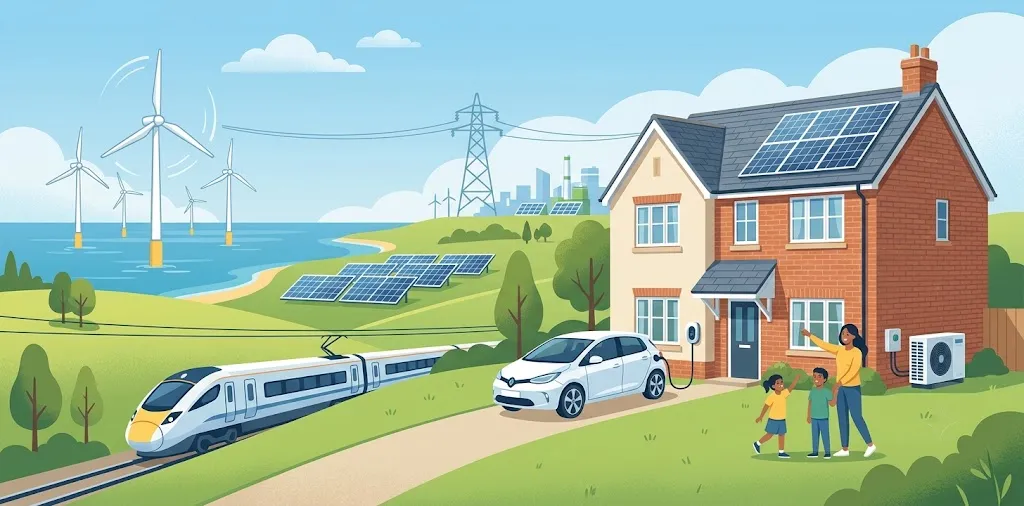
The UK government set up Great British Energy to build clean power across England, Scotland, and Wales. This publicly owned company works alongside private firms to speed up wind and solar projects. The primary target is to make all UK electricity clean by 2030. Massive wind farms in the North Sea provide a large share of this power. Offshore wind turns natural sea breezes into power for millions of plugs and lights.
During a visit to a wind turbine site off the Scottish coast, I saw how large these sea projects really are up close. One rotation of a giant blade can power a standard house for two days. This scale shows why power from wind drops total fuel imports.
To keep the power grid steady when the wind does not blow, the government supports big battery sites and nuclear build projects. Homeowners can see full details on how clean power moves from sea turbines into local homes inside our [related guide on UK green energy grid upgrades].
Home Heating Schemes and Heat Pump Grants
Heating buildings creates a large share of UK carbon output. To fix this, the Boiler Upgrade Scheme offers cash grants to help homeowners swap old gas or oil boilers for heat pumps. Heat pumps pull warmth from the outside air or ground to heat your water and radiators.
- Air Source Heat Pump Grant: Property owners get £7,500 toward purchase and fitting costs.
- Ground Source Heat Pump Grant: Property owners get £7,500 toward total loop system setup.
- Zero VAT Rate: Energy saving items like solar panels and heat pumps have 0% VAT.
Last year, my neighbor replaced an old oil boiler with an air source heat pump using a government grant. Her home stayed warm through January, and her total power bills dropped by 20 percent over six months.
The Future Homes Standard requires new build houses to use low carbon heat systems instead of fossil fuel boilers. Property owners should check eligibility details in our [related guide on heat pump grant application steps] before hiring a local installer.
Electric Vehicles and Clean Transport Policy
The UK transport plan speeds up the shift from petrol engines to electric vehicles (EVs). Car makers must sell a higher percentage of zero-emission cars each year. Local councils receive government funds to build public charging points on residential streets and town parking lots.
- Electric Car Grants: Reduced road tax rates apply to zero-emission cars.
- Chargepoint Upgrades: Grants pay part of the cost to install wall chargers at flat blocks and rented homes.
- Public Transit: City buses are switching to battery electric and hydrogen fuel models.
Switching to an EV reduces running costs per mile compared to petrol. Drivers who charge overnight on smart tariffs pay very low rates per kilowatt-hour. High-speed charge networks make long trips across the country fast and easy for families.
Frequently Asked Questions
Understanding government energy rules helps you pick the right home upgrades. Here are straightforward answers to common questions asked on search engines across the UK.
What is the UK Boiler Upgrade Scheme?
The Boiler Upgrade Scheme is a government fund that gives homeowners in England and Wales £7,500 to help swap old boilers for clean heat pumps.
When will gas boilers be banned in the UK?
New build homes cannot use gas boilers under new building rules. Existing homes can keep gas units, but replacements will phase out by 2035.
How does Great British Energy help normal households?
Great British Energy invests public cash directly into local UK wind, solar, and battery projects. This builds homegrown power and keeps long-term energy prices steady.
Conclusion
The UK sustainable energy transition policies set clear paths for green home heating, clean transport, and renewable power generation. Understanding these rules lets you pick the best times to upgrade your house and claim available grant funds. Switching to green power helps protect the planet while cutting down long-term family bills.
One key expert tip is to check your home insulation before you buy a new heating system. Adding loft insulation or wall draft proofing keeps heat inside, meaning your heat pump needs less electricity to keep you warm.