


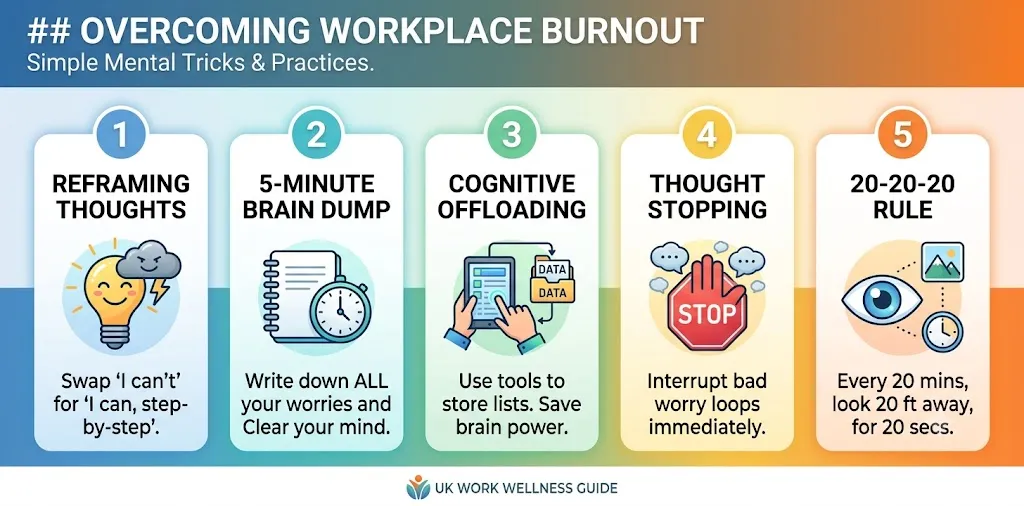
Workplace burnout is a real problem for many workers in the UK. Feeling tired, stressed, and stuck at your desk makes daily tasks feel impossible. You are not alone, and you do not have to feel this way forever. Burnout drains your physical energy and weakens your mental focus, but you can turn things around. This practical guide will help you fix the way you manage stress at work using simple, proven mental tricks. By changing how you process difficult tasks, you can take back control of your workday. You will learn clear steps to protect your mind, lower your daily stress, and feel better about your job.
Cognitive Techniques for Overcoming Workplace Burnout
These practical mental tricks help you retrain your brain, manage daily job stress, and build strong mental habits for a happier working life.
Reframing Negative Thoughts
Reframing means changing how you view a stressful situation. When you feel overwhelmed at work, your mind defaults to bad thoughts like, “I cannot handle this load.” Reframing helps you spot these unhelpful thoughts and replace them with facts. Instead of panicking, you tell yourself, “This is a big project, but I can break it down into tiny steps.”
In my years consulting for UK offices, I watched a marketing manager named Sarah use this exact method. She felt sick every Sunday night because of her long task list. We worked together to change her thinking from “I am going to fail” to “I can only do one task at a time.” Within three weeks, her work stress dropped significantly.
Here is how you can reframe your thoughts during a hard day:
- Catch the thought: Notice when you use extreme words like “always” or “never.”
- Check the facts: Ask yourself if the bad thought is 100% true.
- Switch the narrative: Replace the bad thought with a calm, helpful statement.
Reframing does not mean ignoring real problems. It means stopping bad thoughts from making a hard situation feel even worse. Over time, your brain gets better at staying calm during busy shifts.
The 5-Minute Brain Dump
A full head creates heavy mental fatigue. When you try to hold twenty different tasks in your memory at once, your brain gets tired very fast. A brain dump is a simple way to clear out that mental clutter so you can focus on one thing.
To do this, grab a real piece of paper and a pen. Set a timer for five minutes. Write down every single thing on your mind, including:
- Work emails you need to send.
- Chores you need to do at home.
- Worries about upcoming meetings.
- Small admin tasks you keep forgetting.
Do not worry about neat handwriting or spelling. Just get the words out of your head and onto the paper. Once the timer goes off, look at your list. Group similar tasks together and pick just one item to work on first. Writing things down signals to your brain that the information is safe, which immediately lowers your stress levels. For more ideas on organizing your workday efficiently, check out our [related guide on daily time-mapping strategies].
Cognitive Offloading with Structured Lists
Your brain is made for thinking, not for holding long lists of data. Cognitive offloading means using outside tools—like notebooks, wall calendars, or simple computer apps—to store your workload details. This saves your mental energy for important problem-solving instead of trying to remember every single detail.
During a case study with a small logistics firm in Manchester, we asked the team to stop relying on memory for daily tasks. Every employee started using a physical planner to write down their main goals each morning. After one month, the team reported less mental fog and completed their daily tasks faster.
Use these simple rules for better lists:
- Keep it short: Write down no more than five key tasks per day.
- Be specific: Instead of writing “work on project,” write “type one page of the report.”
- Cross items off: Physically cross out tasks as you finish them to give your brain a quick feel-good boost.
By moving information out of your head, you protect your mind from overload. You will feel far less stressed when you can clearly see what needs your attention.
Practicing Thought Stopping
Thought stopping is a simple mental trick used to break cycles of worry. When you are burned out, your mind often loops over the same worries again and again. You might worry about a mistake you made yesterday or dread a speech you must give next week. Thought stopping cuts that bad loop short before it ruins your mood.
The moment you catch yourself worrying about something you cannot fix right now, picture a bright red stop sign in your mind. Say the word “Stop” out loud or quietly to yourself. Then, immediately move your focus to something physical in your room.
Try these quick ways to switch your focus:
- Name three blue items you can see nearby.
- Feel the weight of your feet flat on the floor.
- Take two slow, deep breaths through your nose.
This technique acts like a reset button for your brain. It stops bad thoughts from growing into full-blown panic while you are trying to work. With practice, you can spot worry loops earlier and shut them down faster.
The 20-20-20 Rule for Mental Breaks
Mental energy is just like physical strength; it runs out if you do not give it a rest. Sitting in front of a screen for hours without stopping causes severe brain fatigue. The 20-20-20 rule is an easy way to give your eyes and your brain a short break throughout the workday.
Every 20 minutes, look away from your computer screen. Focus your eyes on an object that is at least 20 feet away for at least 20 seconds. This simple habit gives your eye muscles a rest and gives your brain a quick breather from processing computer work.
To make this habit stick at your job, try these visual cues:
- Look out a nearby window at a distant tree or building.
- Look at a picture hanging on the far side of your office wall.
- Set a gentle chime on your phone to remind you every 20 minutes.
Taking small, regular breaks stops fatigue from building up over the day. You will end your shift feeling much fresher than if you worked straight through without stopping. If you want to learn more about setting boundaries at work, see our [related guide on setting healthy workplace boundaries].
Frequently Asked Questions
These three common questions cover key doubts people have about workplace burnout, mental health, and recovering your energy while keeping your job.
Can cognitive techniques cure job burnout fast?
Cognitive techniques help lower daily stress quickly, but full recovery takes time. Consistent daily practice of these mental habits will help you build long-term strength against work stress.
How do I know if I have burnout?
Look out for constant physical exhaustion, negative feelings about your job, and lower work performance. If resting on weekends does not fix your fatigue, you may have burnout.
Should I tell my manager I am burned out?
Yes, if you feel safe doing so. Ask for a private chat to discuss your workload. Focus on solutions, like adjusting task deadlines or shifting key priorities together.
Conclusion
Overcoming workplace burnout is completely possible when you have the right tools. By using smart mental habits like reframing bad thoughts, writing down your tasks, and taking regular eye breaks, you can protect your mind from stress. You do not need to fix everything in one day. Focus on small, steady changes to build a calmer and happier working life in the UK. My final expert tip is to treat your brain like a muscle: give it proper rest, avoid taking on too many tasks at once, and focus on one clear step at a time. Your health is always more important than any work project or tight deadline.