

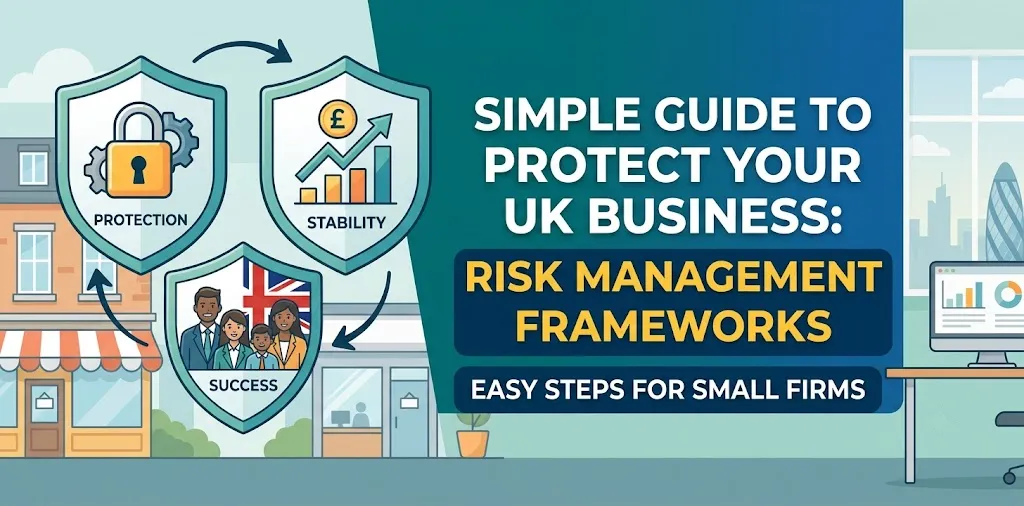
Running a small business in the UK is hard work. You face many changes every day. Prices go up, suppliers fail, and customers change their minds. Without a clear plan, these surprises can hurt your money and stop your growth. Many business owners worry about what might go wrong next.
This guide will help you build a simple plan to protect your business. You will learn how to spot problems before they happen and fix them fast. We will show you easy steps to keep your cash safe, protect your team, and stay on the right side of UK laws. By using these ideas, you will feel more in control of your daily work. You will spend less time fighting fires and more time growing your sales. Read on to discover the best tools to keep your company safe and strong.
Effective Risk Management Frameworks for Small Businesses
Risk management means finding hazards early and stopping them from hurting your company. Here are the best frameworks to help your small UK firm stay safe, stable, and strong.
The ISO 31000 Standard for Small Firms
ISO 31000 is a clear set of rules that helps you handle risk. Big corporations use it, but it works for small UK shops too. It breaks risk management into simple steps so you do not miss anything important.
Here are the five basic steps in this system:
- Scope: Decide what parts of your company need protection first.
- Identify: List everything that could cause a loss or a delay.
- Analyse: Look at how likely each problem is to happen.
- Evaluate: Pick which threats need quick action and which can wait.
- Treat: Put a safety plan in place to stop the harm.
I worked with a small family bakery in Manchester that kept losing money on spoiled milk and flour. We used ISO 31000 to trace their supply chain. We found out that their main walk-in fridge broke down twice in six months. The owner set up a simple daily temperature check and bought a backup power supply. This single step saved them over three thousand pounds in their very first year.
You can start by writing down your top three operational threats today. If you need help with cash issues, read our [Link to related guide on small business cash flow management]. Regular checks keep your firm safe from costly surprises.
The COSO Enterprise Risk Management Model
The COSO model links risk management directly to your main business goals. Instead of just looking at problems, it helps you reach your targets safely. It focuses heavily on company culture, clear leadership, and honest talk among staff.
This model builds on five simple core parts:
- Governance and Culture: Your team must care about safety and honesty.
- Strategy and Goal-Setting: Set realistic goals that match your budget.
- Performance: Find hazards that could stop you from hitting your targets.
- Review and Revision: Check your plans regularly to see if they still work.
- Information and Reporting: Share updates quickly with your key staff.
Last year, I helped an IT repair shop in Leeds switch to the COSO model. They wanted to grow by fifty percent, but they did not have enough trained staff to do the work. By matching their risks to their growth goals, they hired two new apprentices before taking on big new contracts. They hit their targets without burning out their team or disappointing customers.
To make COSO work for you, talk with your staff about safety every week. If you want to build strong workplace rules, check out our [Link to related guide on setting up UK business compliance].
The Bowtie Risk Analysis Method
The Bowtie method gives you a clear visual picture of a risk. It gets its name because the diagram looks like a bow tie. The main danger sits right in the middle, like a knot. The causes sit on the left side, and the effects sit on the right side.
Using a Bowtie diagram helps your team see two critical things:
- Preventive Barriers: Actions you take on the left side to stop the event from happening.
- Mitigation Barriers: Actions you take on the right side to limit damage if the event occurs.
This tool is brilliant for physical safety, cybersecurity, and financial risks. For example, think about a cyber attack on your office computers. The threat sits in the middle. On the left side, your preventive barrier is strong passwords and anti-virus software. On the right side, your mitigation barrier is an offline data backup and a rapid response plan.
When you draw a Bowtie chart, your employees can instantly see their exact role in keeping the firm safe. It removes confusion during an emergency. Try drawing a simple Bowtie diagram on a whiteboard during your next staff meeting. It is one of the easiest ways to train your team without using long manuals or hard words.
Frequently Asked Questions
Here are simple answers to the most common questions small business owners in the UK ask about managing risks and protecting their companies.
What is the main purpose of a risk management framework?
A risk management framework gives your business a structured plan to spot threats early, reduce financial losses, and protect your staff and assets before serious problems happen.
How often should a small business review its risk plan?
You should review your risk plan at least once a year. Also update it whenever you hire new staff, move offices, or buy expensive new equipment for your business.
Is risk management expensive for a small business in the UK?
No, setting up a risk plan costs very little money. It mostly takes time to list threats, train staff, and set up simple habits to prevent accidents and extra costs.
Conclusion
Managing risk in your small business does not need to be hard or expensive. By using simple frameworks like ISO 31000, COSO, or the Bowtie method, you can protect your firm from unexpected losses. Spotting threats early keeps your money safe, protects your staff, and gives you peace of mind every single day.
Our top expert tip is to keep your risk plan simple. Focus on the three biggest hazards that could stop your daily work, and build simple habits to stop them. Do not try to fix everything at once. Small, steady improvements will build a very resilient business over time.
Your next step is easy: grab a notebook today and write down the top three risks facing your company this month. Then, pick one simple framework from this guide to tackle your biggest threat right now.