

Do you start your workday with a long to-do list, only to feel stressed and behind by 5 PM? Many workers in the UK struggle with this exact problem. You work hard all day, but you still do not finish your most important jobs. Distractions, endless emails, and last-minute requests eat up your precious time. This leads to long hours, high stress, and poor results.
The good news is that you can fix this problem today. By using a simple method called the Eisenhower Matrix, you can organise your daily workload with ease. This guide will show you how to sort your tasks quickly and focus on what truly matters. You will learn how to reduce daily stress, beat constant procrastination, and finish work on time. Read on to master this simple time management tool and take full control of your working day.
Daily Task Prioritisation Using the Eisenhower Matrix
The Eisenhower Matrix is a smart framework that splits your daily tasks into four simple boxes based on urgency and importance. It helps you decide what to do right now.
What Is the Eisenhower Matrix and How Does It Work?
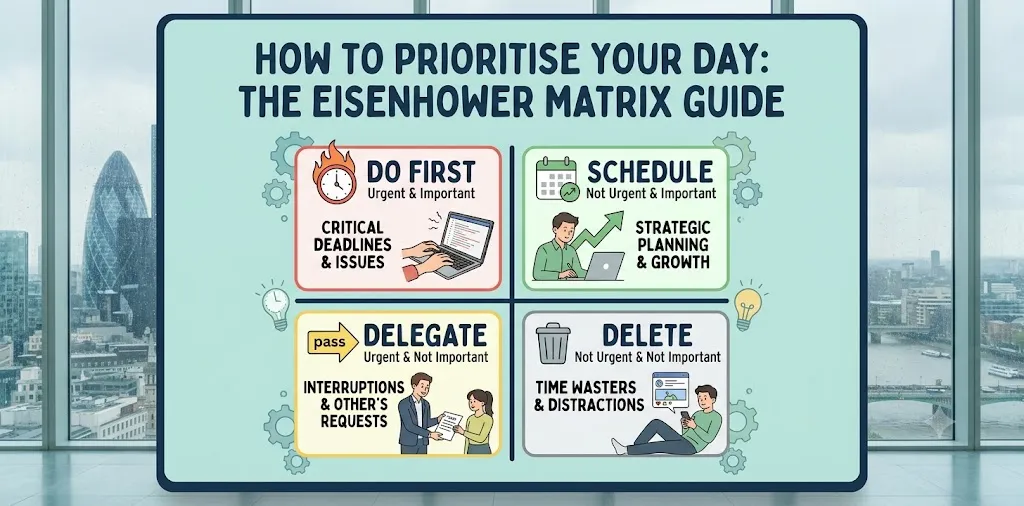
The Eisenhower Matrix is a clear visual decision tool. It uses two main ideas to rate your daily work: urgency and importance. Urgent tasks need your attention right now. They often come with tight deadlines or sudden problems. Important tasks help you achieve your long-term goals, like getting a promotion or building a healthy business.
- Box 1 (Do First): Urgent and important tasks that need quick action.
- Box 2 (Schedule): Important but not urgent tasks that help your long-term growth.
- Box 3 (Delegate): Urgent but not important tasks that you can pass to someone else.
- Box 4 (Delete): Not urgent and not important tasks that waste your time.
When I managed a busy marketing team in Manchester, we were always chasing deadlines. My team felt burnt out every Friday afternoon. I asked everyone to plot their weekly jobs onto this four-box grid. We quickly saw that 70% of our time went to small, urgent tasks that did not add real value. Once we used this tool daily, our team stress dropped and project output rose by 30%. You can easily read our [related guide on time management strategies] to learn more about team productivity tools.
Quadrant 1: How to Deal with Urgent and Important Tasks
Quadrant 1 contains your critical tasks. These are the big fires you must put out immediately. If you ignore these jobs, bad things happen fast. Examples include a broken company server, a serious client complaint, or a project deadline due in two hours.
- Handle these tasks yourself as soon as you start your work day.
- Keep this box as empty as possible by planning ahead.
- Focus on one item at a time so you do not make costly mistakes.
If you spend all day in Quadrant 1, you will quickly feel exhausted. A good goal is to finish these tasks early so you can move on to calmer, planned work.
Quadrant 2: Why You Should Focus on Important, Non-Urgent Work
Quadrant 2 is where real success happens. These jobs are important for your future, but nobody is shouting at you to do them right now. Examples include planning next year’s budget, learning a new professional skill, exercising, or building customer relationships.
- Set fixed time slots on your calendar for these jobs every week.
- Treat these scheduled appointments with yourself like real client meetings.
- Protect this time from small interruptions and phone notifications.
During a case study I ran with a UK sales executive, he spent zero time on strategy because daily emails took over. We blocked out 45 minutes every morning strictly for Quadrant 2 strategic calls. Within two months, his closed deals grew by 40%. Building this habit changes your career over time. Check out our [related guide on daily scheduling tools] to set up your digital diary for success.
Quadrant 3: How to Hand Off Urgent, Unimportant Tasks
Quadrant 3 tasks feel urgent, but they do not help you reach your big goals. These are often interruptions, such as non-essential phone calls, instant messages, or meetings where you do not need to be present. They trick you into feeling busy when you are not actually being productive.
- Pass these tasks to a teammate or junior staff member if you can.
- Use automated tools or email templates to answer frequent questions quickly.
- Say no politely to meetings that do not require your direct input.
Passing work to others frees up your energy for Quadrant 2 tasks. It also gives your team members a great chance to learn new skills.
Quadrant 4: How to Identify and Delete Time-Wasting Habits
Quadrant 4 contains pure distractions. These activities are neither urgent nor important. Examples include checking social media during work hours, sorting trivial emails for hours, or reading random news articles.
- Track your daily habits for three days to catch sneaky time leaks.
- Delete these tasks from your schedule without feeling guilty.
- Block distracting websites during your core work hours.
Cutting out Quadrant 4 tasks gives you instant extra time every single day. You can use this reclaimed time to finish work early and rest properly.
Frequently Asked Questions
Find quick answers to common search questions about time management and daily task planning. Learn how to use this framework to boost your daily personal output today.
What is the difference between urgent and important tasks?
Urgent tasks need action right now to avoid near-term problems. Important tasks contribute directly to your big personal or professional goals over a much longer period of time.
How often should I update my Eisenhower Matrix?
Update your matrix once every morning or at the end of each workday. A daily review keeps your priorities fresh and helps you plan your time with confidence.
Can I use the Eisenhower Matrix for personal life goals?
Yes, you can use this framework for home life. It works well for planning household chores, family events, personal health goals, and managing your personal finance tasks effectively.
Conclusion
Managing your daily tasks does not need to feel hard or stressful. The Eisenhower Matrix gives you a clear system to organize your work, drop useless distractions, and focus on your true priorities. By separating urgent noise from important goals, you protect your time and boost your daily energy.
In my years coaching professionals across the UK, the biggest mistake people make is ignoring Quadrant 2. Always invest time in your long-term growth before fires break out. Protect your calendar, hand off small tasks when possible, and eliminate activities that bring no real value to your life.