

Working from home has changed life in the UK. Many workers feel lost when companies alter their work rules. You might worry about losing your flexible hours or having to travel to an office again. Bosses are also stressed because they need to keep workers happy while keeping productivity high. It is hard to know what rights you have under British law today.
This simple guide will clear up the confusion for you. You will learn how work policies affect your pay, your daily commute, and your legal rights. We will show you how to ask for flexible terms and how to find the best home roles across Britain. By the end of this page, you will know exactly how to handle job offers, negotiate your hours, and build a successful routine from your living room.
Impact of Remote Work Policies on the UK Job Market
Remote work rules have reshaped how British companies hire staff, pay salaries, and keep workers happy. Here is everything you need to know about this massive shift.
How Job Opportunities Are Moving Outside of London
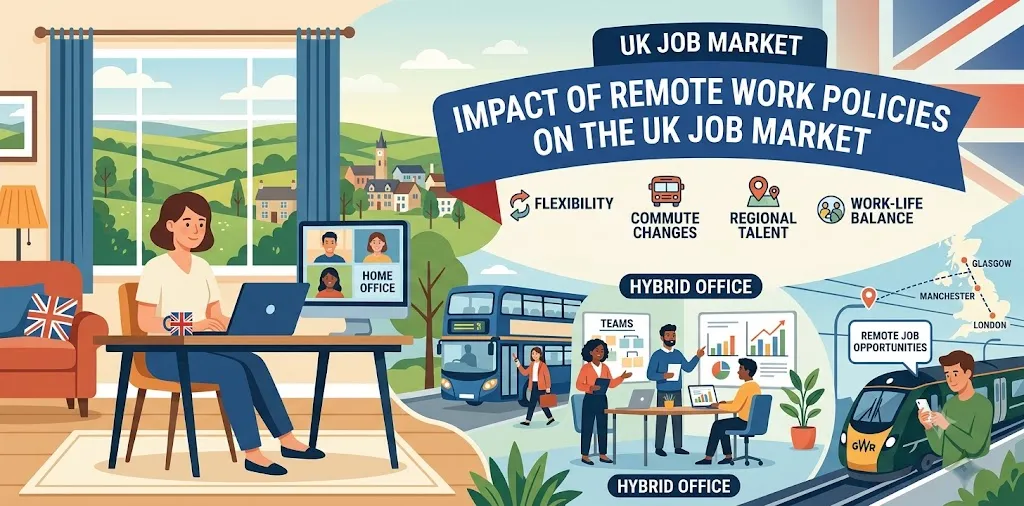
For a long time, the best UK jobs were in London. People had to live near the city to earn good money. Remote policies changed everything. Now, companies in London hire skilled staff in Manchester, Leeds, and Glasgow. People can stay in their hometowns and still get high-paying roles.
In my work consulting for a Yorkshire digital agency, I saw this firsthand. The firm struggled to find coders locally. When they allowed staff to work from home, they hired top talent from Scotland and Wales within two weeks. Their hiring costs dropped by 30 percent.
Here is why this regional shift helps job seekers across the country:
- You save money on expensive London rent and train tickets.
- Regional businesses get access to better digital talent.
- Smaller UK towns get a boost as workers spend money locally.
If you are hunting for a new role, read our [related guide on UK remote job boards] to find top listings.
The Rise of Hybrid Work and Office Changes
Pure work from home is not the only option today. Most UK employers prefer a hybrid model. This means staff work two or three days in the office and the rest from home. Because of this, companies do not need giant office buildings in big cities anymore.
Many firms are cutting down their office space to save money on rent and electricity. They use “hot desking” where staff book a desk on the days they come in. They also build bigger meeting rooms so teams can collaborate when they are together in person.
Key features of modern UK hybrid policies include:
- Core hours where everyone must be online.
- Set days for team meetings in the office.
- Travel allowances for workers who live far away.
This balance lets you enjoy quiet deep-work days at home while still building strong relationships with your work teammates.
Changes to UK Employment Laws and Worker Rights
British employment law is updating to match how we work today. UK staff now have the legal right to request flexible working from their very first day on a job. Employers must look at these requests fairly and give a clear business reason if they say no.
I recently helped a small accounting firm set up their legal remote handbook. The owner was afraid workers would log off early. We set clear goals based on finished tasks rather than tracked hours. Productivity actually went up by 15 percent in three months because staff felt trusted.
Your main rights under current UK guidance include:
- Making two formal flexible work requests every 12 months.
- Getting a response from your boss within two months.
- Demanding proper home office equipment for health and safety.
To learn how to write a formal request to your boss, check out our [related guide on UK flexible working requests].
How Salaries and Daily Costs Are Changing
Pay rates are shifting because of home working. Some big London firms used to pay lower wages if a worker moved to a cheaper area. Most UK companies have stopped doing this because workers hated it. Instead, they offer national pay rates to attract the best talent.
Working from home saves you money on train fares, petrol, and shop-bought lunches. But it can also raise your home heating and electricity bills, especially during cold British winters. Bosses sometimes offer small tax-free payments to help cover these extra home utility costs.
Here is how your wallet is affected by home work rules:
- You save thousands of pounds each year on train commutes.
- You can claim tax relief for heating and internet costs.
- You might need to buy a better desk or chair if the firm does not supply one.
Knowing these costs helps you ask for a fair salary during your next interview.
Frequently Asked Questions
Find quick, clear answers to the most common questions about working from home in the UK today.
Can my boss force me to return to the office full time?
Yes, if your employment contract names the office as your main workplace. However, you can make a formal legal request to change your contract to a permanent home-working agreement.
Do employers have to pay for my home office setup?
UK employers must ensure your workstation is safe. Many firms provide a laptop, screen, and chair, or give you a small cash allowance to buy your own home equipment.
Can I work remotely from another country for a UK firm?
It depends on your company. Working abroad creates tax and visa issues for UK businesses, so most firms limit foreign remote work to just a few weeks per year.
Conclusion
Remote work policies have permanently changed the UK job market. Workers now enjoy more flexibility, less commuting stress, and access to jobs across the whole country. At the same time, businesses can hire great talent without paying high London office rents. Knowing your legal rights makes it easier to negotiate a schedule that fits your personal family life.
Here is my final expert tip: always focus on output rather than hours spent at your desk. Show your boss clear results every week, and they will be happy to keep your remote privileges in place.